


We’ve all been there: a browser full of a million tabs of different options for a door closing or an obscure bit of Foley. With a huge number of sound packs out there, and free sound archives popping up, choosing what to use in you project only seems to get harder.
The plethora of choices makes what should be a simple decision needlessly complicated, not to mention the legal rigamarole and the laundry list of other workflow considerations that come attached to the audio post production workflow.
In this article, we'll give you strategies for how to narrow down the field and choose sound files quickly, easily and with as little fuss as possible. From fundamental sound effects, to genre-specific noises, this article will have you covered.
Are They Royalty-Free?
This is a basic yet easily overlooked aspect of SFX, especially when using free sound effects websites of dubious origin and intent. Make sure you sounds come from one of the Providers of Royalty-Free Sounds. If this is overlooked, the consequences of licensing can be severe for yourself and your employer, so think twice the next time you’re sailing the seven seas of the internet.
Royalties are owed whenever you use someone's intellectual property, such as music or SFX, in your work without the right license or permissions to do so. This is usually why providers who offer royalty-free sounds make such a big deal in pointing it out, as we do for Krotos Studio and with our own free soundpacks.
If you're on a site that doesn’t explicitly state that the sounds are royalty-free outright, then we would recommend avoiding using them unless there is an explicit part of the user agreement that your project is exempt from (for example, not-for-profit works may use BBC archives SFX in some cases, but others shouldn’t be doing so).
This is another reason to be sceptical about file-sharing and piracy sites, as well as any blogs that may not know they're sharing copyrighted material.
Are you Certain They’re From That Source?
This is a caveat to the previous point, but it is common for the aforementioned BBC archive’s sounds, or others with definable origins, to turn up in some places. While it may be tempting to drag and drop such usable sounds into your projects, doing so can land you in hot water suddenly and without warning. Especially in the age of algorithmic copyright checkers.
This also extends to sites that offer paid-for sounds and seem legitimate, but may seem a little dodgy in other ways, such as having to pay them outside of the website with a code, or some other unusual means of payment. These sites may just be reselling other people's work illegally, so if something feels off, it may be worth doing your research within the sound design community to see if anyone has flagged the site before.
Outside of the legal and ethical aspects of using these sounds, these sites may also have other nefarious intentions, such as malware or selling your data. If they're comfortable stealing other people's work for profit, what else might they be fine with doing?
Are They Unique?
Moving away from the legal implications, and focusing on the creative aspect of sound design, is the evergreen question of ‘Am I doing something that’s already been done?’. The more you become familiar with sound design and pay more attention to movies and television, you undoubtedly start to notice the same sounds popping up over and over again. Think of the infamous Wilhelm Scream which makes fun of this phenomenon in a meta way.
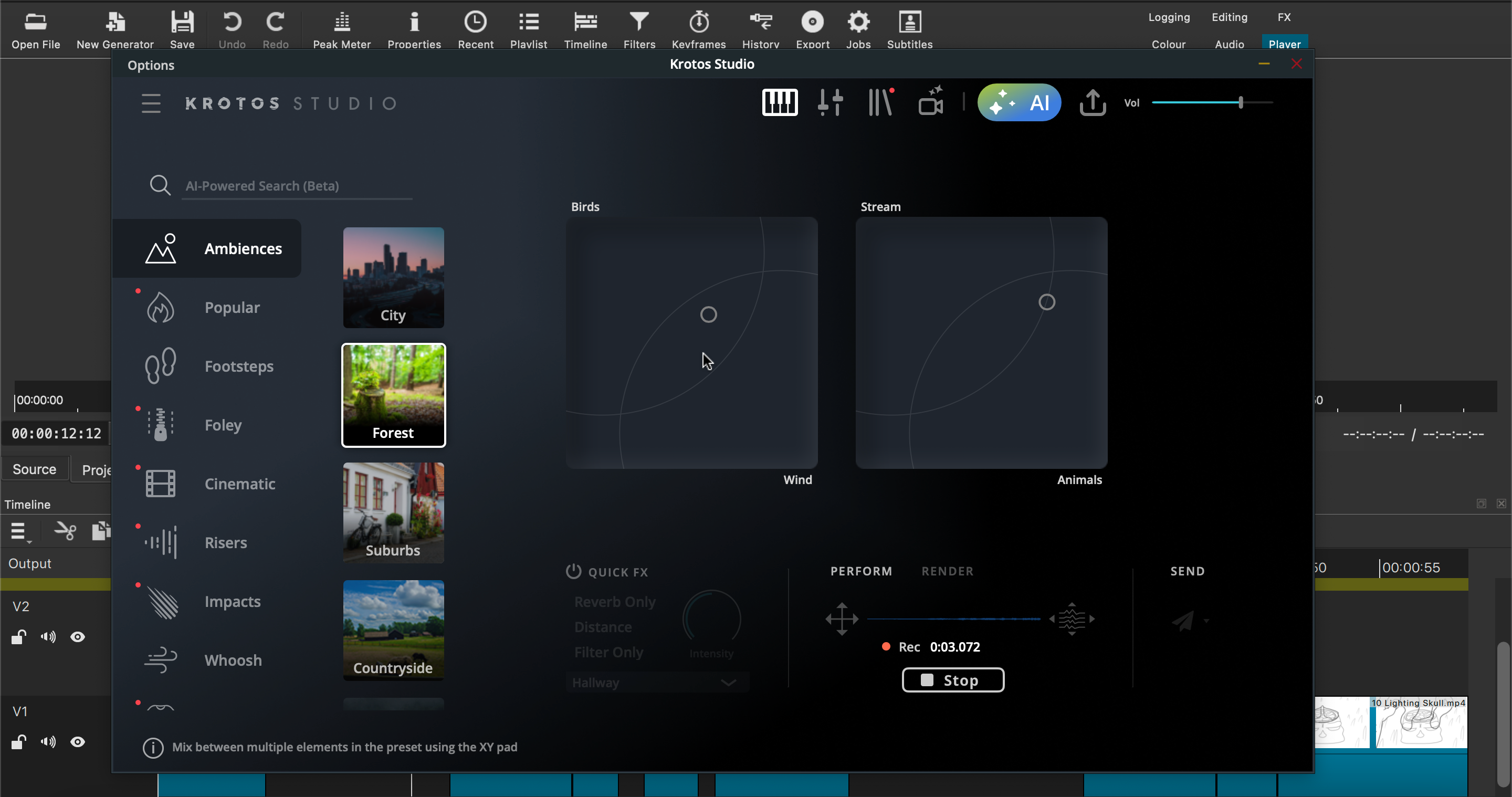
You want your work to mesh with the image and distract from the artifice behind filmmaking, hiding the cuts and helping to sell the illusion. To do this, you need sounds that haven’t been heard a million times already. So avoid sounds that are too recognisable, too generic for the task, so that the fakery is noticeable. You can also use sound design tools such as Weaponiser to combine multiple sounds to create something more unique and specialised. Or if you really want tailored sounds that perfectly match, then maybe try our very own Krotos Studio Pro to create sounds in real time to the image.
Think of the famous adage of sound design, which is that sound effects should be invisible to the viewer. If people are noticing the sound design, you may be overstepping your role and distracting from the story and picture. Of course, one size does not fit all; in a comedy film, using stock and recognisable sound effects can make the joke even funnier. So pick your battles, I would argue the hard-hitting and memorable sounds of Dune 2 are certainly not invisible.
Is the Quality High Enough?
In your search for unique sounds that stand out from the crowd, you may find yourself gravitating towards community sites such as freesound.org for inspiration. Websites that offer free sound effects can contain some really unique material due to the size of their user base, with atmospheric recordings in particular, you can find a surprising array of site-specific recordings. However, you cannot guarantee audio quality due to the material being uploaded by whoever has access to a microphone and an internet connection. With some sounds being uploaded in MP3, which simply won't do for a professional production.
In general, professional audio quality for film sound has a sample rate of 96,000 Hz with a bit depth of 24 (most commonly as WAVs). The higher sample rate allows for editing, such as pitchshifting or timestretching, with minimal artifacts, and is therefore invaluable for creative sound design. Therefore, we recommend that any sounds you're looking for that you intend to manipulate and process (for example, using real animal sounds to create a sci-fi creature) be of this quality. Since Krotos Studio was developed specifically to deliver high-quality sounds for video and game projects, ensuring high resolution isn't a problem for our users.
For sounds that you're going to leave mostly unchanged, 48,000 Hz can be plenty, but we would recommend getting the 96 kHz files if you can, as you never know what sounds may be useful for other tasks later on in the production.
Are there Enough Variations of Each Sound?
Just because you’ve found the perfect sound, doesn’t mean the job is finished, especially if you’ve only found a single sound file of it. If a sound needs to be repeated many times within a project, you'll need many more variations on said sound to avoid noticeable repetition. Be it gunshots or car passes, the more a sound repeats, the more the brain picks up the similarities between the files, and the more unnatural they begin to feel. This can also be the case with atmospheric recordings that sound perfect until you realise they're too short; some sneaky looping and crossfading can get the job done if you need an extra 20 seconds or so. But if you need many more minutes of said atmosphere, the ear will begin picking up the innate rhythms and phrasing within the recording.
To avoid this, you need to make sure you're using the right sounds for the job from the get-go. Look for sound packs that offer numerous repetitions of the same sound at both the same proximity and other distances. Variations in the performance of the sound will help too. If you're doing a construction scene, for example, you would not want all the hammer hits to be of the exact same strength. You want to have enough variations that you have enough for the focal moments of the sound, and can make even more variations out of them via layering if you need to.
Variety is key; the more iterations of a sound, the better. So when you're looking for soundpacks or through sound libraries, always keep in mind how prevalent the sound you're looking for is within the scene(s). Plugins such as Reformer can help in layering your sounds and performing them alongside the image to avoid these noticeable repetitions.
Get Unique Variations Every Time When you Make Your Own with Krotos Studio
If you're looking for something a bit more bespoke to your image, straight out of the box, without the need to download even more sound packs. Krotos Studio offers a free trial, so you can start experimenting straight away. Here is an example of a bedroom door preset:
Other examples of Krotos Studio’s presets can be found here.
