


Everyone knows something about copyright, but not many people know enough about copyright. Royalties, copyrights and licenses are terms that some of us use interchangeably. We know that it’s simplest to search for royalty-free sound effects, but why? And what are the consequences if we don’t use those in our projects?
In this article, we’ll demystify copyright as it applies to sound design, explaining things like licenses, royalties and their use in modern day industries. We’ll do it all with the help of legal experts, and we’ll go on to tell you the exact legal situation when you deal with us here at Krotos Audio.
We Asked a Lawyer
This article has been reviewed for general legal accuracy by members of the team at RafterMarsh Law, a law firm specialising in both audio and music technology and in entertainment, TV and film. If you have any additional questions, you are welcome to reach out to philipp@raftermarsh.com for our international and US practice, and terry@raftermarsh.com for the UK.
Key Take-Aways and TLDRs
In this article, we’ll cover the following points in more detail, and we suggest you read it all in full in order to fully understand the situation. Here’s an overview, though.
- Copyright is an intellectual property right that is automatically “vested in” you when you create something new and original. Owning a copyright means that no one can exploit (IE “commercialise”) your creation without your permission.
- When you give someone permission to use your work, this is called licensing. You grant them a license to use your copyrighted work while you still retain ownership.
- The license can be granted under conditions. These could be conditions about…
- How the work is used (is the use commercial, can it be edited, in which territory, duration, field of use etc.)
- How much money you should be paid every time it’s used – this is called a royalty payment
- How much money you get paid as a one-time payment for its use – this would be used in a royalty-free license arrangement
- If you use material whose copyright belongs to someone else, and you don’t arrange a license, then the copyright owner can claim damages or seek injunctive relief requiring you to stop using or distributing infringing material. The owner would have to discover your use of their material in order to know, but this is getting easier.
How Copyright works
Copyright is a type of intellectual property right. When you create something that’s new and original, the copyright for that work automatically lies with you, however, the rules may be different if you are an employee creating a work for an employer.

Let’s say you write a page of original words to create a story – you now own the copyright to that story, assuming that it wasn’t copied from someone else or didn’t use elements of something else that was copyrighted (for example, fan fiction using existing characters from a copyrighted work).
What Holding the Copyright for Something Means
If you own the copyright for a work, no one is allowed to use it without your permission, except in limited cases permitted by laws (such as fair use in the U.S., or fair dealing in the UK/EU, which may allow for purposes such as commentary or education). In our digital era, where copying something is usually as simple as a copy and paste, it’s certainly possible for people to use copyrighted work, but that doesn’t mean they were allowed to. This is where people can get into trouble if caught.
Can You Prove You Did it First?
If you ever have to defend your copyright, you’ll need to prove that you own it in the first place. The copyright may have vested in you automatically when you created a work, but there would need to be evidence of this creation having happened.
This is usually a little simpler with digital works, where you can prove an old upload or appearance on a website. But if you drew a picture 20 years ago and now can’t prove when it was drawn, you may have issues claiming the copyright for that image. In this case, registering your copyright officially with your local authorities (if available) or otherwise using a deposit service (for example, copyright.eu in the EU), that keep a copy for timestamping, can help providing proof of the date of a work’s creation.
In some places, you can register your copyright. This is often cheap and simple, making it worth it for any copyright you hold and consider to be valuable. For example, in the U.S., while the copyright exists without registration, you must register with the U.S. Copyright Office to sue in court and claim statutory damages.
Not discussed, further reading: Copyright Marks [UK source]
Licensing: a Result of Copyright
Copyright holders don’t necessarily want to use their work only themselves. In many many cases, they want to allow others to use their work, but for a fee, without transferring the actual copyright ownership.
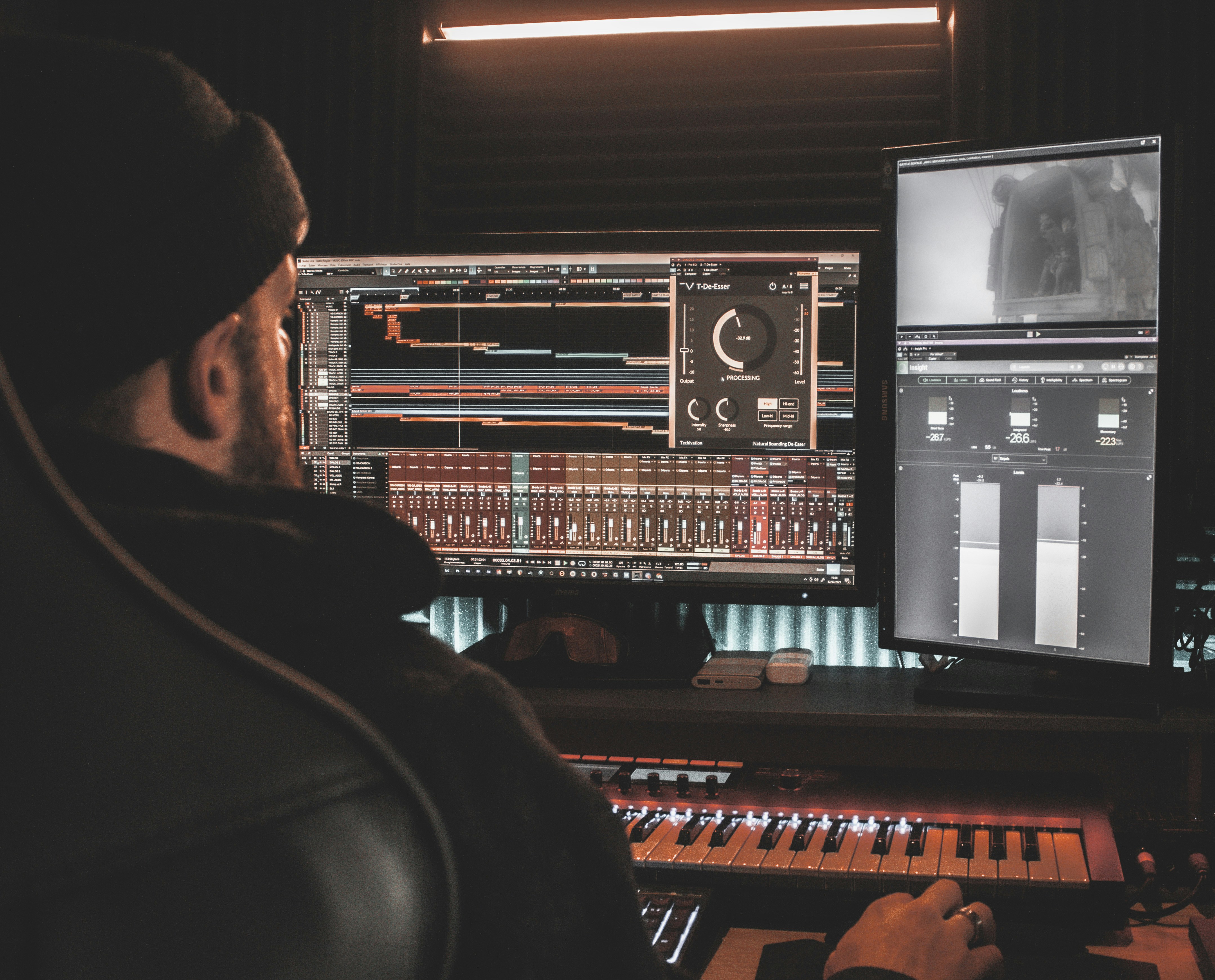
One obvious case is ours: sound design in the film, TV or games industries. Licensing sound effects for use in film or TV means that the work of recording can be done by one person or entity (the copyright owner), and the use of that recording can be shared across many people and projects. Each of these would, theoretically, be willing to pay for a license if it means they don’t have to go out and record the sound themselves. When it comes to Footstep Sounds or Traffic Noise, creating a new recording for every use case could cost too much money.
Licensing Conditions and License Agreements
And so, whenever you buy or download a copyrighted work for your own use case – a sound file, for example – you may often find a license agreement attached to it, which tells you more about the agreement for the use of the file. Are you allowed to use it in commercial work? Are you allowed to edit it? For how long are you allowed to use it? Whatever the license entails, you should be aware of its terms before you agree to them, and downloading files usually means acceptance of applicable terms. There’s a lot to keep in mind when Choosing Sound Effects to Download for Film and TV.
For example, the License agreement for the free BBC Sound Effects collection has restrictions on the purposes you can use the works/recordings for, whether you can charge to show something you made with them, and how you can use them.
And for another example, licenses for Krotos Studio allow you to use our software for personal projects, freelance and client content, and digital and social media advertising, but not for projects intended for television, cinema, game distribution, or broadcast. The license for Krotos Studio Pro additionally covers TV, film, video game audio, and broadcast and commercial use.
In exchange for the license, the deal may often be that you have to pay a fee for usage of the material. There are two main ways this can be done: through royalty payments or through a one-time payment.
What are Royalties?
Royalties are payments for the use of property (typically intellectual property), with a structure as laid out in a licensing agreement (see above).
Most people know the concept of royalties from musicians, actors or authors. These people are paid royalties for the use of their copyright work:
- Musicians and songwriters may be paid royalties when their songs are sold on an album, played on the radio or synced to TV or film.
- Actors may be paid royalties when a film or TV show is shown, or sold or downloaded.
- Authors might be due royalties every time a book is sold or when the story is adapted for another medium (film, stage, etc)

In every case, the exact setup depends on the individual license deal, although there are more common and less common structures of royalties.
Sometimes clearances may be simpler, such as adapting a book for the stage, if one author has retained all rights. Though it’s important to confirm no rights have been assigned to a third party that could conflict with your anticipated project. When a project gets bigger and bigger, and uses hundreds or multiple thousands of pieces of intellectual property, there’s a lot of paperwork to be done, and a lot of receipts to chase for years to come. The paperwork can’t be avoided, but what if the payments could?
What is a Royalty-Free License?
Dispensing with the need to collect information about royalty payments and to arrange these payments later, a royalty-free license cuts out the after-the-fact work. The cost? A royalty-free license usually comes with something that has been paid for once upfront, whether it’s a sound distributed as part of our Sound Effects Libraries, or something you create with Weaponiser or Krotos Studio.
Royalty-Free Doesn’t Mean License-Free
To use something copyrighted, you need to have a license – there’s no escaping that. A royalty-free license still has to be acquired; you just may not have noticed it as part of a paid-for software download or a software subscription. If you’re downloading free sounds on the web, you should be sure that the content comes with a license and what conditions apply – especially if you’re intending to use the work commercially.
What Will Happen If I Don’t Use Sound Effects with a proper license?
This depends. You shouldn’t use copyright material without the permission of the copyright holder. But what will happen if you use it without permission anyway?
Famous and successful acts in highly publicised copyright infringement cases are reported to have been paid out millions of dollars. For less successful or well known cases, these damages will be a matter for the court or legal settlement in question to award (usually the amount of the lost license fee and potential additional statutory damages and legal costs) . In extreme cases, there could even be criminal penalties for wilful infringement on a commercial scale.
The consequences of using unlicensed copyright material may not even be felt by you: Usually, the clients or publishers are held responsible for the end product not being properly licensed, however, any user or contributor can be held liable, even if they only played a small part in its creation.
That’s if you get caught. In the past, your likelihood to get caught using copyrighted material was lower. Today, AI-based content recognition systems are very sophisticated at detecting audio even when it’s masked alongside other clips, although these systems do have their limits. Systems like these will inevitably improve in future.
This article is provided for general information and educational purposes only and does not constitute legal advice. While the general principles discussed apply in many countries, precise positions may differ in each jurisdiction and you should seek professional advice from a lawyer licensed in the relevant jurisdiction relating to copyright, licensing, or intellectual property rights.
